Breast augmentation is a cosmetic breast surgery performed to increase breast volume, enhance breast symmetry, or restore breast fullness that has changed due to ageing, pregnancy, breastfeeding, or weight fluctuations. The procedure typically involves the placement of breast implants, although treatment recommendations vary according to each individual’s anatomy and aesthetic goals.
Progressions in breast implant technology and surgical techniques have expanded the range of options available for breast augmentation in Singapore. Factors such as implant material, size, shape, surface characteristics, and placement all influence surgical planning and expected outcomes.
Understanding the different implant options, the consultation process, and the stages of recovery can help individuals make informed decisions before undergoing breast augmentation. This guide explains the procedure, suitable candidates, implant choices, and important considerations before and after surgery.
What Is Breast Augmentation?
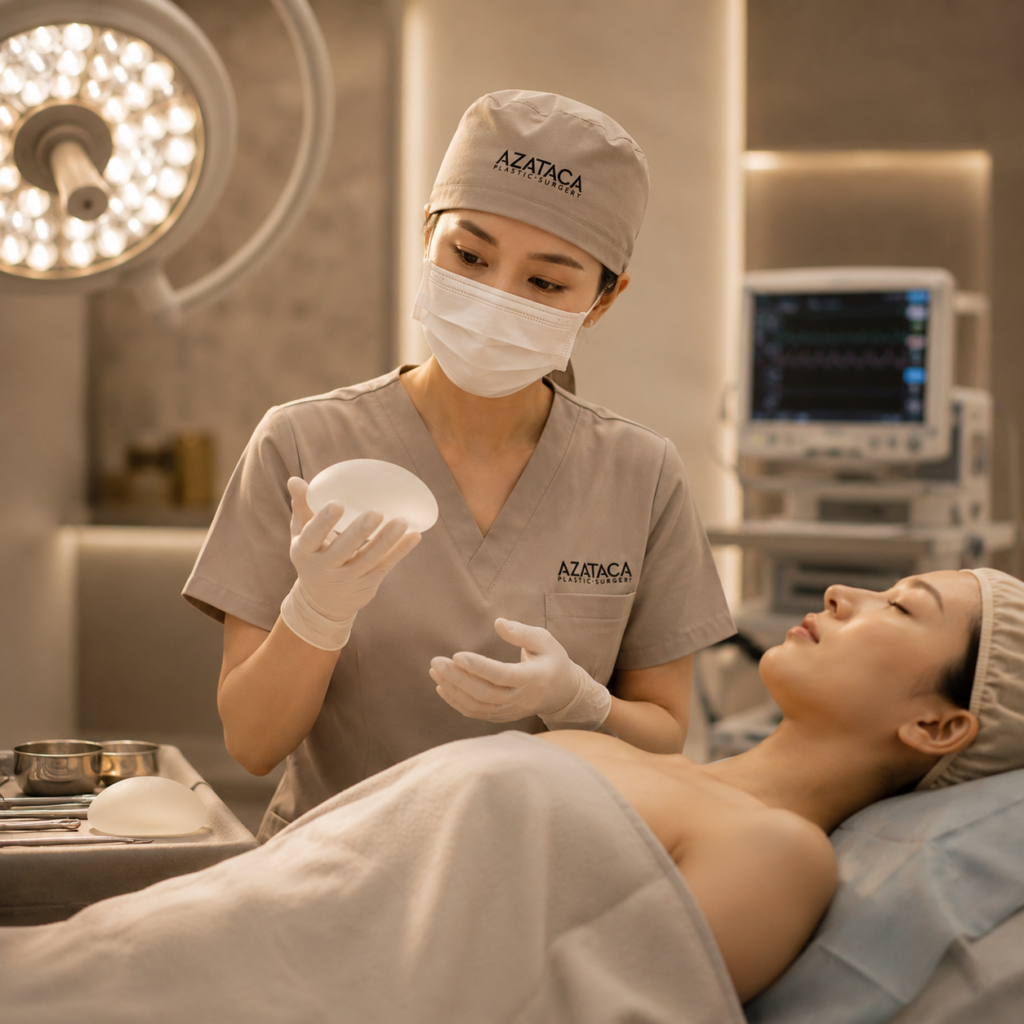
Breast augmentation is a surgical procedure designed to increase breast volume or enhance breast shape using breast implants. In selected cases, breast augmentation may also be combined with other procedures, such as a breast lift, depending on the individual’s anatomical needs and treatment objectives.
The procedure is planned according to factors including chest dimensions, existing breast tissue, skin characteristics, and the desired postoperative appearance.
Common Reasons for Breast Augmentation
Individuals choose breast augmentation for various personal reasons, which differ from one patient to another.
Common treatment objectives include:
- Increasing breast size
- Improving breast symmetry
- Restoring breast volume following pregnancy or weight loss
- Enhancing overall breast proportions
- Replacing older breast implants where appropriate
The purpose of the procedure is determined during an individual consultation rather than through a standardised approach.
How Breast Augmentation Is Performed
Breast augmentation generally involves creating a pocket within the breast area before inserting the selected implant.
The procedure may vary according to:
- Implant type
- Implant size
- Implant placement
- Chest anatomy
- Skin characteristics
- Existing breast tissue
The surgical technique is individualised to achieve an outcome that is appropriate for the patient’s anatomy while maintaining patient safety.
Who Is a Suitable Candidate for Breast Augmentation?
Suitability for breast augmentation depends on more than an individual’s desired breast size. A comprehensive consultation evaluates physical health, breast anatomy, skin quality, lifestyle factors, and treatment expectations.
An accredited plastic surgeon will recommend whether breast augmentation is appropriate after assessing these factors.
General Considerations
Individuals who may be suitable candidates often:
- Are in good general health
- Have completed breast development
- Have realistic expectations regarding surgical outcomes
- Understand the recovery process
- Do not have untreated medical conditions that significantly increase surgical risk
Every recommendation is based on individual assessment rather than age or body type alone.
Personal Treatment Goals
Breast augmentation may be considered for individuals who wish to address changes in breast appearance resulting from:
- Pregnancy and breastfeeding
- Weight fluctuations
- Congenital breast asymmetry
- Naturally smaller breast volume
- Age-related volume loss
The most appropriate surgical approach depends on the patient’s anatomy rather than a predetermined implant size.
Importance of Individual Assessment
During consultation, the plastic surgeon evaluates several clinical factors before recommending treatment.
These typically include:
Assessment Area | Purpose |
Breast anatomy | Determines suitable implant dimensions |
Chest wall measurements | Supports implant selection |
Skin elasticity | Influences surgical planning |
Existing breast tissue | Assists with implant placement decisions |
Overall health | Evaluates surgical suitability |
A personalised assessment allows treatment recommendations to be tailored to each individual’s needs.
Types of Breast Implants Available in Singapore
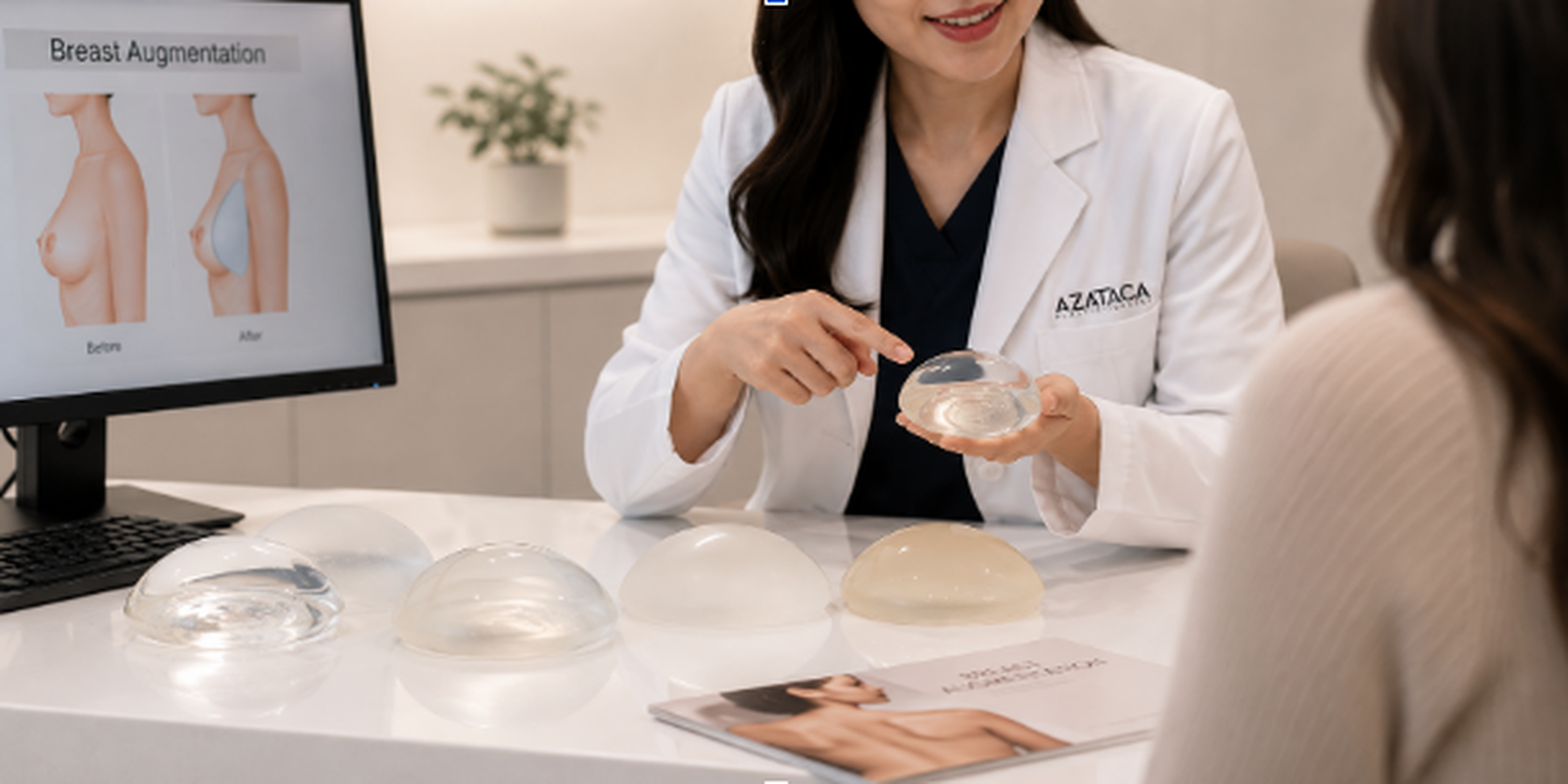
Silicone gel implants are the principal type used for cosmetic breast augmentation in Singapore. Available implants differ in dimensions, projection, gel cohesivity, shell surface and other design characteristics.The most appropriate implant depends on the patient’s anatomy, treatment objectives, and clinical assessment.
Saline-filled implants also exist internationally, although their availability and use vary between markets. Patients should discuss the implant options currently available in Singapore with their surgeon.
Silicone Breast Implants
Silicone breast implants contain a cohesive silicone gel that is designed to retain its shape while providing a soft consistency.
These implants are commonly selected because they are available in various:
- Sizes
- Profiles
- Shapes
- Cohesiveness levels
- Surface designs
Different silicone gel technologies provide varying degrees of firmness and projection depending on surgical objectives.
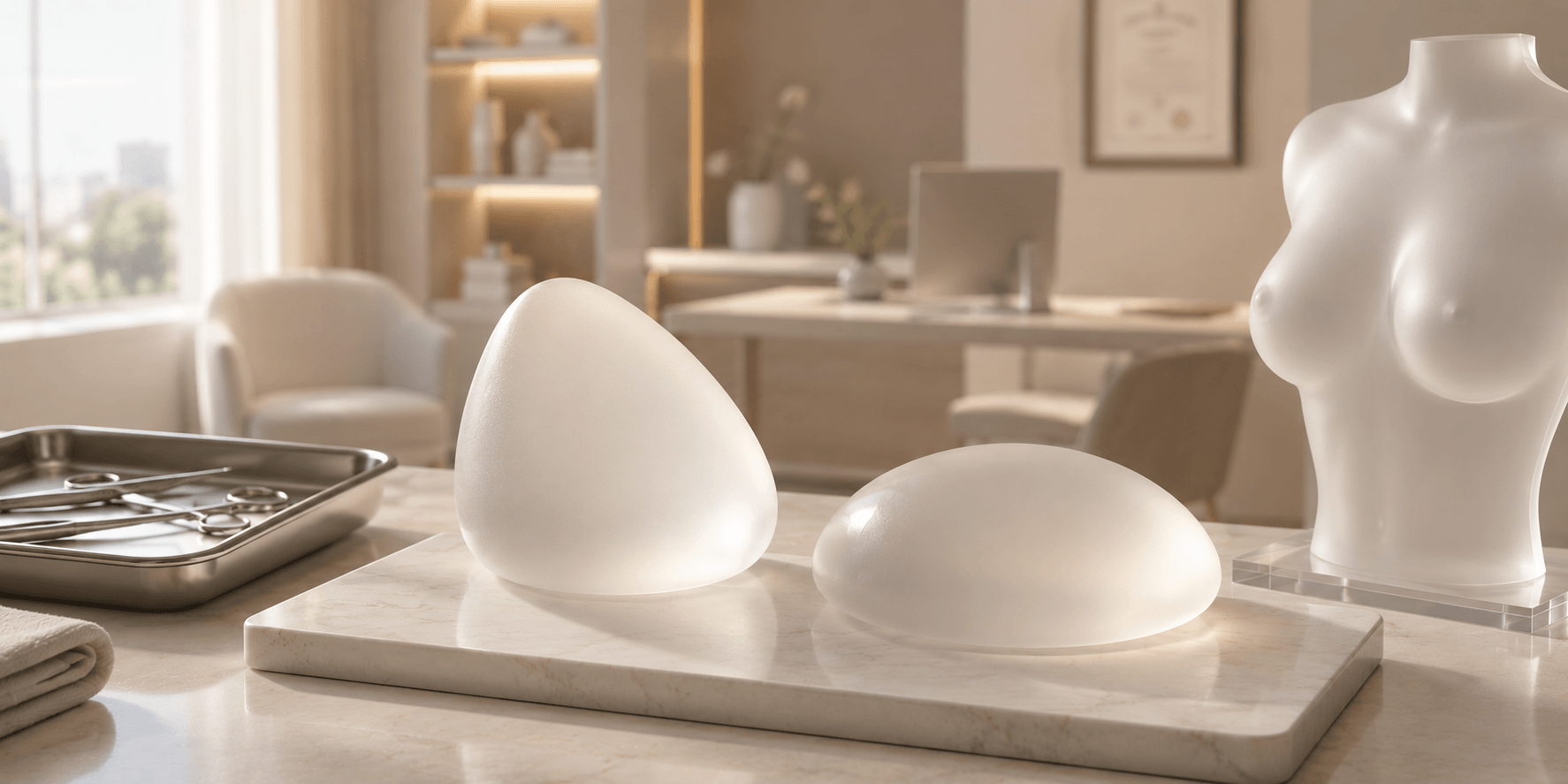
Implant Shape
Breast implants are generally available in two primary shapes.
Implant Shape | General Characteristics |
Round implants | Widely used for augmentation. Final shape depends on gel characteristics, projection, implant dimensions, pocket and surrounding breast tissue. |
Anatomical (teardrop) implants | Have a predetermined teardrop configuration and require attention to implant orientation; they may be considered for selected anatomical indications.Designed to follow the natural breast contour with greater lower pole projection |
The selection of implant shape depends on breast anatomy, chest dimensions, tissue characteristics, and desired breast proportions.
Implant Surface
Modern breast implants are manufactured with different surface characteristics.
Examples include:
- Smooth surface implants
- Textured surface implants
- Modern surface technologies developed by individual manufacturers
For example, Motiva® breast implants are designed with several proprietary technologies aimed at supporting a natural appearance, feel and implant performance, such as:
- SmoothSilk®/SilkSurface®: A specialised smooth implant surface designed to minimise inflammatory and fibrotic responses.
- ProgressiveGel™: A proprietary gel technology designed to provide softness, flexibility and natural-looking movement.
- TrueMonobloc+®: Integrates the implant shell, gel and patch into a cohesive structure for enhanced implant integrity.
- BluSeal+®: A barrier layer designed to help reduce silicone diffusion while allowing visual inspection of the implant.
- Qid®/Zen® RFID Technology: Available in selected Motiva implants, this technology enables implant identification and provides access to important device information after surgery.
Implant surface is very relevant to long-term safety. Breast implant-associated anaplastic large cell lymphoma (BIA-ALCL) is a rare lymphoma that develops in the capsule or fluid surrounding an implant and has been associated predominantly with textured breast implants. The degree of risk varies according to implant surface characteristics and device type. Implant selection should therefore take into account both aesthetic characteristics and current safety information.
Choosing the Right Implant Size, Shape, and Placement
Selecting an appropriate implant involves balancing patient preferences with anatomical limitations. Rather than choosing a size based solely on cup measurements, surgeons evaluate proportions that are compatible with the individual’s body structure.
The objective is to achieve balanced breast proportions while respecting tissue characteristics and long-term breast health.
Implant Size Selection
Implant size is determined using multiple anatomical measurements rather than a desired bra cup size alone.
Factors considered include:
- Chest width
- Breast base diameter
- Existing breast tissue
- Skin elasticity
- Overall body proportions
These measurements help identify implant dimensions that fit comfortably within the available breast tissues.
Implant Projection
Projection refers to how far the implant extends forward from the chest wall.
Different projection profiles may be selected depending on:
- Chest dimensions
- Breast width
- Desired breast contour
- Existing soft tissue coverage
Projection is considered alongside implant size to create balanced proportions rather than excessive forward prominence.
Implant Placement
Implant placement refers to the location of the breast implant relative to the chest muscle. The chosen placement influences breast contour, soft tissue coverage, and the overall surgical plan.
The two primary implant placement options are:
Implant Placement | General Description |
Subglandular placement | Implant positioned above the chest muscle and beneath the breast tissue |
Subfascial | Implant positioned beneath the fascia covering the pectoralis major but above the muscle |
Dual-plane/ Partial submuscular | Upper portion of the implant lies beneath the pectoralis major while the lower breast is released to allow the implant to sit within the breast envelope |
Appropriate placement depends on several factors, including the amount of existing breast tissue, chest anatomy, implant characteristics, and the patient’s treatment objectives.
Factors That Affect Breast Augmentation Planning
Every breast augmentation procedure is individually planned. Rather than relying on a standard technique, the surgeon evaluates multiple clinical considerations to determine an approach that aligns with the patient’s anatomy and treatment goals.
These factors influence implant selection, surgical technique, incision placement, and postoperative expectations.

Anatomical Considerations
The physical characteristics of the breast and chest play an important role in surgical planning.
These include:
- Breast width
- Skin elasticity
- Breast tissue thickness
- Nipple position
- Chest wall shape
- Inframammary-fold position
- Degree of breast ptosis or pseudoptosis
- Degree of breast asymmetry
Careful assessment helps ensure that implant selection is appropriate for the individual’s natural proportions.
Lifestyle and Personal Goals
Lifestyle considerations may also influence treatment planning.
Examples include:
- Participation in regular physical activity
- Occupational requirements
- Future pregnancy considerations
- Desired breast proportions
- Preference for subtle or more noticeable enhancement
These discussions assist the surgeon in recommending a personalised treatment approach while maintaining realistic expectations.
Factors that Affect Breast Augmentation Cost in Singapore
The cost of breast augmentation in Singapore varies according to the implant selected, complexity of the operation, anaesthetic requirements, surgical facility and whether additional procedures such as breast lift, fat grafting or correction of asymmetry are required. When comparing quotations, patients should clarify whether the quoted fee includes the surgeon’s fee, breast implants, anaesthesia, operating-facility charges, medications and routine postoperative follow-up. A consultation is required to provide an individualised estimate because surgical requirements differ between patients.
What to Expect Before and During the Procedure
Breast augmentation involves several stages, beginning with consultation and continuing through surgery and immediate postoperative recovery.
Understanding each stage allows patients to prepare appropriately before undergoing treatment.
Before Surgery
The preoperative consultation focuses on determining whether breast augmentation is suitable and establishing a personalised surgical plan.
During this stage, the plastic surgeon typically discusses:
- Medical history
- Previous breast surgery
- Current medications
- Lifestyle factors
- Desired treatment outcomes
- Implant options
- Potential risks and expected recovery
Clinical photographs and anatomical measurements may also be taken to assist with surgical planning.
Patients receive preoperative instructions, which may include temporary medication adjustments, fasting requirements where appropriate, smoking cessation advice, and recommendations for postoperative support.
During the Procedure
During implant breast augmentation, an incision is made and a pocket is created either above or partly beneath the pectoralis major muscle, depending on the patient’s anatomy and the surgical plan. The selected implant is then inserted, its position and symmetry are assessed, and the incision is closed. The incision is most commonly placed in the inframammary fold beneath the breast, although other approaches may be considered in selected patients.
Several elements are considered throughout the operation, including:
- Selected implant type
- Implant placement
- Incision location
- Symmetry assessment
- Patient safety monitoring
The duration of surgery varies according to the surgical technique and whether additional procedures are performed at the same time.
Following completion of the procedure, patients are monitored before being discharged or transferred for further observation where clinically indicated.
Breast Augmentation Recovery Timeline and Aftercare
Recovery following breast augmentation is a gradual process that continues beyond the initial healing period. While many patients resume light daily activities relatively early, complete healing and implant settling occur progressively over several months.
Recovery varies between individuals and depends on the surgical technique, implant placement, overall health, and adherence to postoperative instructions.

Early Recovery
During the first stage of recovery, temporary changes are expected as the body begins to heal.
Patients may experience:
- Swelling
- Bruising
- Mild discomfort
- Tightness across the chest
- Temporary changes in breast sensation
These effects generally improve gradually as healing progresses.
Patients are typically advised to follow postoperative instructions regarding wound care, prescribed medications, activity modification, and supportive garments where recommended.
Intermediate Recovery
As healing continues, swelling gradually decreases and breast tissues begin adapting to the implanted device.
During this stage, patients often receive guidance regarding:
- Returning to routine daily activities
- Resuming light exercise
- Sleeping positions
- Scar management
- Ongoing follow-up appointments
Recovery progresses at different rates for each individual, making regular review appointments an important part of postoperative care.
Long-Term Healing
Complete healing extends beyond the visible recovery period.
Over time:
- Breast implants gradually settle into position.
- Surgical scars continue to mature.
- Breast tissues soften.
- Final breast contours become more apparent.
The exact timeline differs according to individual healing characteristics and the surgical technique used.
Benefits, Risks, and Long-Term Considerations
Breast augmentation can enhance breast volume, symmetry, and overall body proportions for appropriately selected patients. However, as with any surgical procedure, it also involves potential risks and long-term considerations that should be discussed during consultation.
Understanding both benefits and limitations supports informed consent and realistic expectations.
Potential Benefits
Depending on individual treatment goals, breast augmentation may:
- Increase breast volume
- Enhance breast symmetry
- Restore fullness following pregnancy or weight loss
- Improve overall breast proportions
- Enhance clothing fit for some individuals
The degree of enhancement varies according to anatomy, implant selection, and surgical planning.
Potential Risks
All surgical procedures involve potential complications.
Examples associated with breast augmentation may include:
- Infection
- Bleeding
- Changes in breast sensation
- Implant displacement
- Capsular contracture
- Implant rupture
- Need for revision surgery
The likelihood of these complications varies according to individual circumstances and the surgical approach.
Long-Term Considerations
Breast implants are medical devices that require ongoing awareness following surgery.
Patients should understand that:
- Breast implants are not considered lifetime devices.
- Periodic clinical review may be recommended.
- Breast appearance continues to change naturally with ageing, pregnancy, or weight fluctuations.
- Future surgery may be required in some cases.
Regular follow-up appointments allow the plastic surgeon to monitor long-term outcomes and address any concerns that arise over time.
Frequently Asked Questions (FAQs)
How long does breast augmentation recovery usually take?
Recovery varies according to the surgical technique, implant placement, and individual healing response. Many patients gradually return to light daily activities within the timeframe advised by their plastic surgeon, while complete healing and implant settling typically continue over several months.
What is the difference between silicone and saline breast implants?
Silicone breast implants are filled with cohesive silicone gel, whereas saline implants contain sterile saline solution within a silicone shell. Both implant types are available in different sizes and profiles, and the most appropriate choice depends on the patient’s anatomy, treatment objectives, and recommendations following clinical assessment.
How is the appropriate implant size determined?
Implant size is selected using anatomical measurements rather than bra cup size alone. Factors such as chest width, breast base diameter, existing breast tissue, skin elasticity, and body proportions are evaluated to determine an implant that is compatible with the individual’s anatomy.
Will breast implants need to be replaced in the future?
Breast implants are medical devices and should not be considered lifetime devices. Although many implants remain intact for many years, future monitoring or additional surgery may be recommended depending on factors such as implant condition, natural ageing, pregnancy, weight changes, or the development of complications.
Can breast augmentation achieve natural-looking results?
Breast augmentation aims to create breast proportions that are appropriate for the individual’s anatomy and treatment goals. Implant size, shape, projection, placement, and the quality of existing breast tissue all contribute to the final outcome. A personalised surgical plan helps support balanced and proportionate results.
Will breast augmentation affect future breast screening?
Patients should inform healthcare professionals if they have breast implants before undergoing breast imaging. Additional imaging techniques or specialised views may be recommended to ensure appropriate breast evaluation. Regular breast health screening should continue according to medical recommendations.
Understanding Breast Augmentation as a Personalised Surgical Procedure
Breast augmentation is a highly individualised cosmetic breast surgery that involves careful assessment, detailed surgical planning, and structured postoperative care. Implant selection extends beyond choosing a preferred size and includes consideration of implant material, shape, projection, placement, and compatibility with the patient’s anatomy.
A comprehensive consultation enables an accredited plastic surgeon to evaluate breast anatomy, discuss realistic expectations, explain the available implant options, and determine whether breast augmentation is suitable for the individual’s treatment goals. Recovery is a gradual process, and long-term outcomes are supported through appropriate postoperative care, regular follow-up, and an understanding of the ongoing considerations associated with breast implants.
By understanding the procedure, implant options, recovery expectations, and long-term care requirements, patients are better equipped to make informed decisions regarding breast augmentation.
Discuss Your Breast Augmentation Options With a Specialist
If you would like to learn more about breast augmentation in Singapore or discuss whether breast implant surgery may be appropriate for your individual circumstances, you can get in touch with AZATACA Plastic Surgery Centre. A personalised consultation allows a qualified plastic surgeon to assess your anatomy, explain suitable breast implant options, discuss expected outcomes, review potential risks, and provide guidance on the recovery process based on your treatment goals.