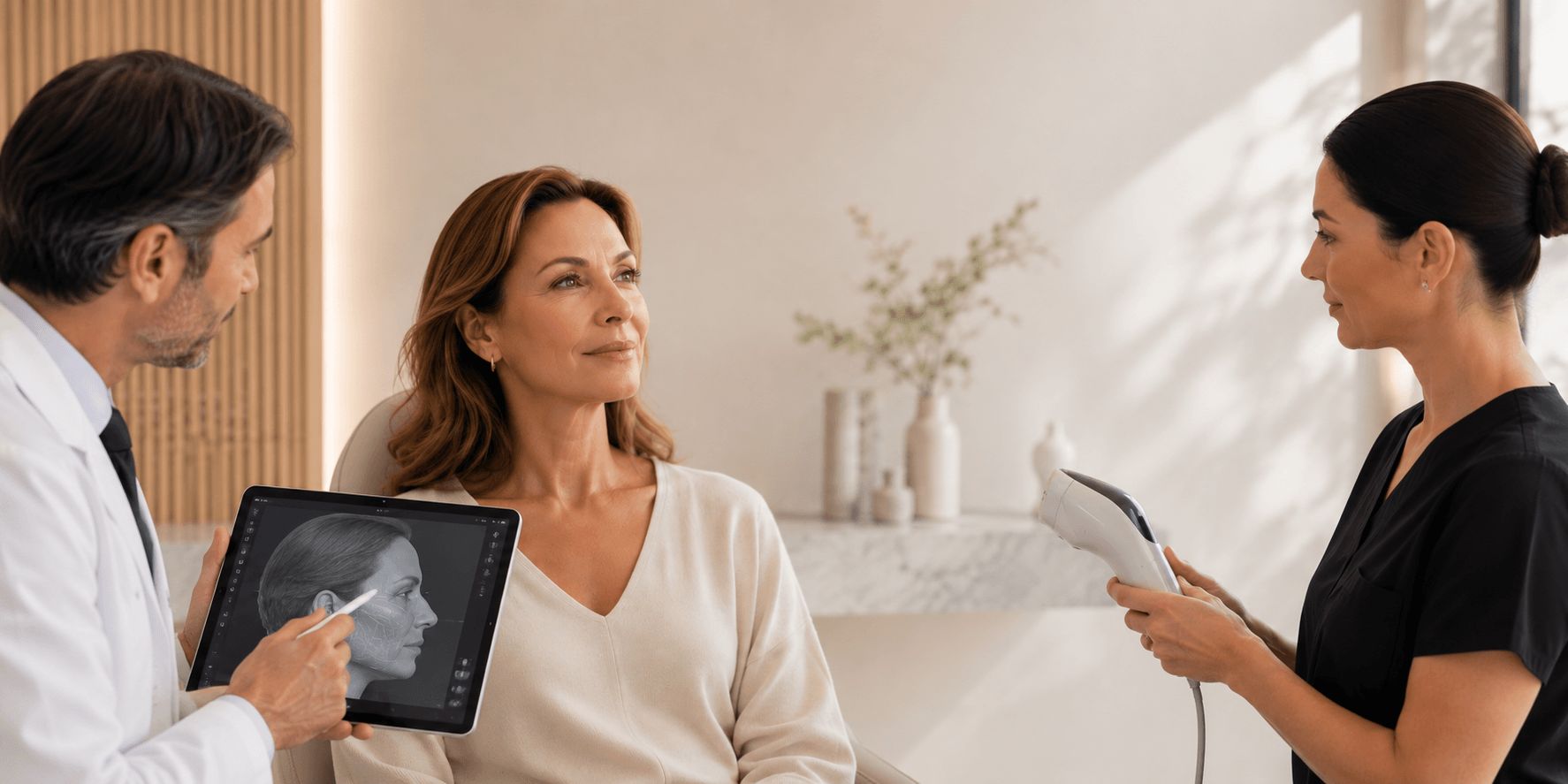
Facial ageing is a gradual process that affects the skin, underlying soft tissues, muscles, and facial contours over time. As these changes become more noticeable, some individuals consider facial rejuvenation treatments to address skin laxity, deeper facial folds, and changes in facial definition. Available options generally fall into two broad categories: surgical face lift procedures and non-surgical facelift treatments.
Each approach offers different benefits, recovery considerations, and expected outcomes. While a surgical facelift aims to reposition deeper facial tissues and remove excess skin, non-surgical treatments primarily focus on enhancing skin quality or providing temporary lifting effects without surgery.
Understanding how these treatment options differ can help individuals make informed decisions during consultation with a qualified plastic surgeon. This guide explains the key differences between surgical and non-surgical facelifts, including their indications, expected results, recovery, and factors that may influence treatment selection.
Understanding Facial Ageing and Why It Happens
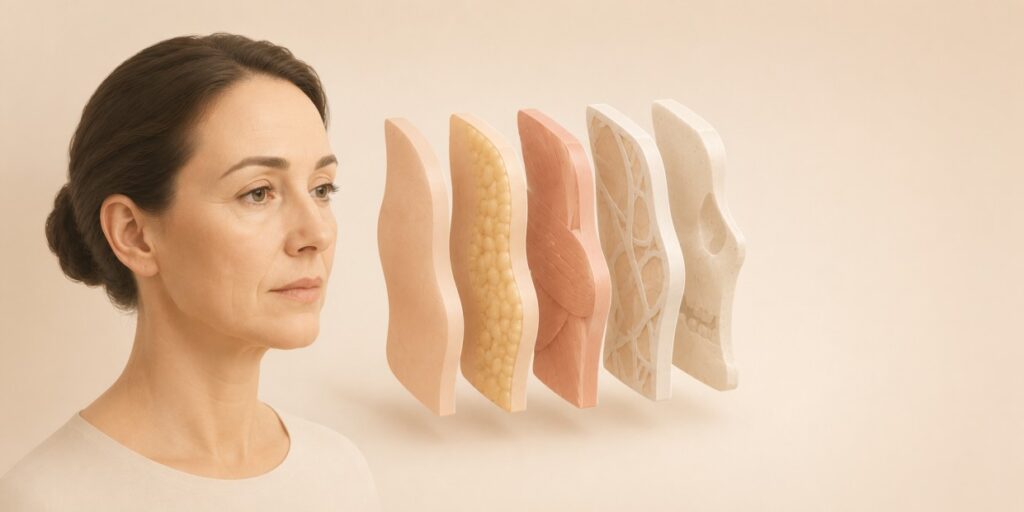
Facial ageing results from natural biological changes affecting the skin, fat, muscles, ligaments, and facial bones. These changes occur gradually and are influenced by genetics, lifestyle, and environmental factors.
Although ageing affects everyone differently, several structural changes commonly contribute to an older facial appearance.
Changes in the Skin
The skin gradually produces less collagen, elastin, and hyaluronic acid with age. These components help maintain skin firmness, elasticity, and hydration.
As these natural substances decline, individuals may notice:
- Fine lines
- Wrinkles
- Reduced skin elasticity
- Thinner skin
- Increased skin laxity
Sun exposure and smoking may further accelerate these changes.
Changes Beneath the Skin
Ageing affects more than the skin surface. The deeper facial tissues also undergo structural changes.
These may include:
- descent and redistribution of facial fat compartments;
- attenuation of retaining ligaments;
- changes in skin and soft-tissue elasticity;
- repetitive muscular activity contributing to dynamic lines;
- volume loss in selected facial regions;
- gradual remodelling of the facial skeleton
Together, these changes contribute to features such as sagging cheeks, jowls, deeper nasolabial folds, and loss of jawline definition.
Factors That Influence Facial Ageing
Several factors influence the rate and extent of facial ageing.
Common contributing factors include:
| Factor | Potential Effect |
| Age | Progressive tissue laxity |
| Genetics | Individual ageing patterns |
| Sun exposure | Accelerated collagen breakdown |
| Smoking | Reduced skin quality and healing |
| Weight fluctuations | Changes in facial volume |
| Lifestyle habits | Overall skin health |
Understanding these factors helps determine whether surgical or non-surgical treatments are likely to be more appropriate.
What Is a Surgical Facelift?
A facelift primarily improves tissue descent, jowls and lower-face or neck contour. It is not principally a treatment for fine surface wrinkles, pigmentation, enlarged pores or general skin texture. These concerns may require separate skin-directed treatments.
Rather than simply tightening the skin, modern facelift techniques generally focus on repositioning deeper tissue layers while preserving a natural facial appearance.
Goals of Face Lift Surgery
Face lift surgery aims to improve facial contours by addressing moderate to advanced skin laxity and tissue descent.
Common treatment goals include:
- Improving jawline definition
- Reducing jowl formation
- Softening deep facial folds
- Repositioning sagging facial tissues
- Improving neck contour in selected patients
The specific surgical approach varies according to the individual’s anatomy and the areas requiring correction.
The degree of neck improvement depends on whether the planned operation includes specific neck-lift components, such as treatment of the platysma, submental tissues or excess neck skin. A facelift and a neck lift overlap, but they are not necessarily identical procedures.
How the Procedure Is Performed
The exact surgical technique depends on the patient’s facial structure, treatment goals, and degree of ageing.
Although techniques vary, the procedure generally involves the following:
- Careful placement of surgical incisions
- Elevation and repositioning of deeper facial tissues
- Removal of excess skin where appropriate
- Closure of the incisions to support healing
Some patients may undergo additional procedures such as eyelid surgery, brow lift, neck lift, or fat grafting as part of a comprehensive facial rejuvenation plan, depending on individual assessment.
Who May Benefit from Surgical Facelift
Surgical facelift procedures are generally considered for individuals with moderate to advanced facial ageing where structural tissue repositioning may provide more comprehensive improvement.
Potential candidates often present with:
- Significant facial skin laxity
- Prominent jowls
- Deep nasolabial folds
- Loss of lower facial definition
- Neck skin laxity
Suitability depends on overall health, facial anatomy, and treatment objectives rather than age alone.
What Is a Non-Surgical Facelift?

“Non-surgical facelift” is a broad, non-technical term used to describe a range of injectable and energy-based treatments. These treatments work in different ways: some restore volume, some improve dynamic wrinkles or skin quality, and others aim to produce modest tissue tightening.
Unlike surgical facelift procedures, they do not reproduce the anatomical changes achieved by surgical facelift surgery. These treatments do not reposition deeper facial structures or remove excess skin. Instead, they aim to enhance skin quality, stimulate collagen production, restore facial volume, or provide temporary lifting effects.
Common Non-Surgical Treatments
Several aesthetic treatments may be combined depending on the patient’s concerns.
Examples include:
- Injectable wrinkle relaxers
- Dermal fillers
- Collagen-stimulating injectables
- Energy-based skin tightening treatments
- Ultrasound-based treatments
- Radiofrequency treatments
Treatment selection depends on individual anatomy and the specific ageing changes being addressed.
Treatment Objectives
Non-surgical facelift treatments generally focus on milder signs of facial ageing.
Common objectives include:
- Improving facial volume
- Softening facial lines
- Enhancing skin texture
- Stimulating collagen production
- Improving mild skin laxity
Because these treatments work differently from surgery, they may not adequately address significant tissue descent or excess skin.
Recovery Following Non-Surgical Treatment
Recovery following non-surgical treatments is generally shorter than recovery after surgery, although it varies according to the procedure performed.
Some patients experience temporary effects such as:
- Mild swelling
- Bruising
- Tenderness
- Redness
These effects usually resolve within a relatively short period, allowing many individuals to resume routine activities sooner than after surgical procedures.
Key Differences Between Surgical and Non-Surgical Facelifts
Surgical and non-surgical facelift treatments differ in their objectives, techniques, recovery periods, and expected longevity. While both approaches are intended to improve signs of facial ageing, they address different levels of anatomical change.
Understanding these distinctions allows patients to discuss treatment options more effectively during consultation.
Feature | Surgical Face Lift | Non-Surgical Facelift |
Primary approach | Repositions deeper facial tissues and removes excess skin | Enhances skin quality or restores volume without surgery |
Anaesthesia | Usually requires anaesthesia appropriate for surgery | Usually performed without general anaesthesia |
Downtime | Longer recovery period | Shorter recovery period |
Degree of correction | Moderate to advanced facial ageing | Mild to moderate facial ageing |
Duration of results | Longer-lasting structural enhancement | Temporary enhancements requiring maintenance |
Tissue repositioning | Yes | No |
Skin removal | Yes, where appropriate | No |
Neither treatment is universally better than the other. The most appropriate option depends on the individual’s facial anatomy, degree of ageing, treatment goals, and clinical assessment.
Level of Correction
The greatest distinction between the two approaches lies in the level of anatomical correction that each can achieve.
Surgical facelift procedures reposition deeper facial structures and remove excess skin, making them suitable for more pronounced facial ageing.
Non-surgical treatments primarily enhance skin quality, facial volume, or mild skin laxity without altering deeper facial tissues.
Treatment Duration
Surgical facelift procedures are completed during a planned operation.
Non-surgical facelift treatments may involve several treatment sessions depending on the technologies or injectables used.
The treatment plan is determined according to the patient’s individual concerns and clinical assessment.
Comparing Results, Longevity, and Recovery Time
The expected outcomes of facial rejuvenation depend on the treatment selected, the severity of ageing, and the individual’s healing response.
Although both approaches aim to improve facial appearance, their duration of results and recovery timelines differ substantially.
Expected Results
Surgical facelift procedures are designed to provide structural improvement by repositioning facial tissues.
Common enhancements may include:
- Better jawline definition
- Reduced jowl prominence
- Softer facial folds
- Improved neck contour
- A more refreshed facial appearance
Non-surgical treatments generally enhance:
- Skin hydration
- Facial volume
- Mild skin laxity
- Fine lines
- Skin texture
These treatments may be suitable for earlier stages of facial ageing but are generally less effective for significant tissue descent.
Longevity of Results
Results following surgical facelift procedures generally last longer because the underlying facial tissues have been repositioned.
In contrast, many non-surgical treatments gradually diminish as injectable products are absorbed or collagen stimulation naturally decreases over time.
The duration of improvement varies depending on:
- Individual ageing processes
- Lifestyle factors
- Skin quality
- Treatment technique
- Type of non-surgical treatment used
Maintenance treatments may be recommended following non-surgical procedures to preserve results.
Recovery Comparison
Recovery requirements differ considerably between treatment options.
| Recovery Consideration | Surgical Face Lift | Non-Surgical Facelift |
| Swelling | More noticeable initially | Usually mild |
| Bruising | Common during early healing | Usually limited |
| Return to routine activities | Gradual according to recovery | Often earlier depending on treatment |
| Complete healing | Several months for final tissue maturation | Generally much shorter |
Recovery varies between individuals, and patients should always follow the postoperative instructions provided by their treating surgeon or healthcare professional.
Comparing Costs and Long-Term Value
Surgical and non-surgical facial rejuvenation differ not only in technique but also in how treatment is delivered over time.
Surgical facelift procedures are generally performed as a single planned operation, whereas non-surgical treatments often involve ongoing maintenance sessions to preserve their effects.
Rather than comparing treatment costs alone, patients should consider the overall treatment pathway, expected longevity, recovery requirements, and the level of correction appropriate for their needs.
A comprehensive consultation allows the plastic surgeon to explain these considerations based on the individual’s facial anatomy and treatment goals.
Who Is a Suitable Candidate for Each Treatment?
Suitability for facial rejuvenation depends on multiple factors rather than age alone. A personalised assessment considers facial anatomy, skin quality, overall health, and the degree of facial ageing.
Candidates for Surgical Face Lift
Individuals who may be considered suitable for face lift surgery often present with more advanced structural changes affecting the lower face and neck.
Examples include:
- Moderate to significant skin laxity
- Pronounced jowls
- Deep facial folds
- Loss of jawline definition
- Neck skin laxity
Patients should also be medically suitable for surgery and understand the associated recovery process.
Candidates for Non-Surgical Facelift
Non-surgical treatments may be appropriate for individuals with earlier or milder signs of facial ageing.
Common concerns include:
- Mild facial volume loss
- Early skin laxity
- Fine lines
- Minor contour changes
- Desire for treatment without surgery
These treatments may also be considered by patients who are not currently suitable candidates for surgery or who prefer less invasive approaches after discussing available options with their healthcare provider.
Benefits and Limitations of Surgical vs Non-Surgical Facelifts
Both approaches offer distinct advantages and limitations. Understanding these differences supports realistic expectations before treatment.
Surgical Face Lift
Potential benefits include:
- More comprehensive correction of facial ageing
- Longer-lasting structural enhancement
- Ability to address significant tissue descent
- Enhanced lower face and neck contour
Limitations include:
- Surgical recovery
- Incisions and associated scarring
- Longer healing period
- Surgical risks associated with operative procedures
Potential risks include bleeding or haematoma, infection, delayed healing, unfavourable scarring, temporary or persistent sensory change, facial-nerve weakness, hairline changes, skin compromise, asymmetry, undercorrection and the possibility of revision surgery. Individual risk varies with the operation, health, smoking or nicotine exposure and previous facial procedures.
Non-Surgical Facelift
Potential benefits include:
- No surgical incisions
- Shorter recovery period
- Lower treatment invasiveness
- Gradual facial rejuvenation
Limitations include:
- Temporary results
- Limited ability to correct significant skin laxity
- Maintenance treatments may be required
- Less structural correction compared with surgery
These considerations should be discussed alongside the individual’s treatment goals during consultation with a qualified plastic surgeon.
Factors to Consider When Choosing the Right Procedure
Choosing between a surgical face lift and a non-surgical facelift requires careful evaluation of individual facial anatomy, treatment goals, overall health, and the degree of facial ageing. No single treatment is suitable for everyone, and the most appropriate approach should be determined through a comprehensive clinical assessment.
A qualified plastic surgeon will evaluate both the visible signs of ageing and the underlying anatomical changes before recommending a treatment plan.
Degree of Facial Ageing
The extent of skin laxity and tissue descent is one of the most important considerations.
Individuals with more advanced facial ageing may benefit from procedures that address deeper structural changes, whereas those with milder ageing concerns may be suitable candidates for less invasive treatments.
Desired Outcome
Patients should consider the type of improvement they hope to achieve.
Questions to discuss during consultation include:
- Is the primary concern skin laxity or volume loss?
- Is improvement required in the lower face, mid-face, neck, or multiple areas?
- Is a temporary or longer-lasting outcome preferred?
- Are realistic expectations aligned with the treatment being considered?
These discussions help establish treatment objectives that are appropriate for the individual’s anatomy.
Recovery Commitment
Recovery requirements differ considerably between treatment options.
Patients should consider:
- Available time for recovery
- Work and family responsibilities
- Ability to follow postoperative instructions
- Attendance at follow-up appointments
Understanding these practical considerations helps determine whether a surgical or non-surgical approach better fits the individual’s circumstances.
Medical Suitability
General health also influences treatment selection.
The plastic surgeon may assess:
- Existing medical conditions
- Previous facial surgery
- Smoking history
- Medication use
- Skin quality
- Healing capacity
These factors contribute to determining whether surgery is appropriate or whether an alternative approach should be considered.
Frequently Asked Questions (FAQs)
What is the difference between a face lift and a non-surgical facelift?
A surgical face lift repositions deeper facial tissues and removes excess skin to address moderate to advanced facial ageing. A non-surgical facelift uses minimally invasive treatments to enhance skin quality, restore volume, or address mild skin laxity without surgery.
How long do facelift results typically last?
The longevity of results depends on the treatment performed and individual ageing factors. Surgical facelift procedures generally provide longer-lasting structural improvements, while non-surgical treatments often require maintenance sessions because their effects gradually diminish over time.
Can a non-surgical facelift replace surgery?
Not always. Non-surgical treatments may enhance early signs of facial ageing, but they cannot reposition deeper facial tissues or remove excess skin. Individuals with significant skin laxity or tissue descent may achieve more comprehensive enhancement through surgical treatment following appropriate clinical assessment.
Who is a suitable candidate for face lift surgery?
Suitability depends on factors including facial anatomy, overall health, skin quality, and treatment goals. Individuals with moderate to advanced facial ageing who are medically suitable for surgery and have realistic expectations may be considered appropriate candidates after consultation with a qualified plastic surgeon.
Is recovery longer after surgical facelift procedures?
Yes. Surgical facelift procedures generally involve a longer recovery period than non-surgical treatments because the operation requires tissue healing. Recovery timelines vary according to the procedure performed and the individual’s healing response.
Can other facial procedures be combined with a facelift?
Depending on individual assessment, a facelift may sometimes be performed together with complementary facial procedures such as eyelid surgery, brow lift, neck lift, or fat grafting. The suitability of combining procedures is determined during consultation based on the patient’s anatomy, health status, and treatment objectives.
Choosing the Most Appropriate Facial Rejuvenation Approach

Surgical and non-surgical facelift treatments each have an important role in facial rejuvenation, but they address different stages of facial ageing and produce different types of results. Surgical face lift procedures focus on repositioning deeper facial structures and correcting more advanced tissue laxity, while non-surgical treatments primarily enhance skin quality, restore volume, or address mild to moderate signs of ageing.
The most suitable treatment depends on several factors, including facial anatomy, the severity of ageing changes, desired outcomes, overall health, and willingness to undergo recovery. A comprehensive consultation with a qualified plastic surgeon provides the opportunity to evaluate these factors and develop a personalised treatment plan based on clinical assessment rather than preference alone.
Understanding the benefits, limitations, recovery expectations, and long-term considerations of each option allows patients to make informed decisions that align with their individual needs and realistic expectations.
Discuss a Suitable Face Lift Procedure for Your Needs
If you would like to learn more about face lift surgery or discuss whether a surgical or non-surgical facial rejuvenation approach may be appropriate for your individual circumstances, you may get in touch with AZATACA Plastic Surgery Centre. A personalised consultation allows a qualified plastic surgeon to assess your facial anatomy, explain suitable treatment options, discuss expected outcomes, and review recovery considerations based on your specific goals.