Breast implant technology has advanced significantly over the past decades. Modern implant systems are no longer designed only around size and shape; they are engineered to interact more naturally with the body. One example of this development is the Motiva implant, a silicone breast implant designed with specialized gel properties, shell construction, and surface technology.
Motiva implants are commonly used in breast augmentation and breast reconstruction procedures. In Singapore, plastic surgeons evaluate implant characteristics alongside individual anatomy, tissue thickness, and aesthetic goals to determine the most suitable implant type.
Understanding how Motiva implants are designed, how they behave after placement, and how they compare with other implant systems can help patients feel more informed before discussing breast augmentation options with a surgeon.
What Is a Motiva Implant?
A Motiva implant is a silicone breast implant designed for breast augmentation and reconstruction procedures. It features cohesive silicone gel, a multi-layer shell, and engineered surface technology intended to support natural breast movement and structural stability.
Unlike older implant designs that focused mainly on shape retention, Motiva implants are engineered to respond dynamically to posture and movement while maintaining internal structure. These characteristics influence how the implant behaves once placed in breast tissue.
How Breast Implant Technology Has Evolved

Breast implants have undergone several generations of technological development.
Earlier implants primarily focused on increasing breast size and maintaining a fixed shape. Over time, research and engineering improvements have introduced more advanced design features.
Modern breast implants now focus on:
- silicone gel cohesivity and elasticity
- implant shell strength and flexibility
- surface engineering and tissue compatibility
- long-term implant traceability
These innovations aim to improve how implants interact with surrounding tissue and adapt to natural body movement.
Key Components of Motiva Implant Technology
Motiva implants incorporate several structural features that influence performance, durability, and surgical handling.
Cohesive Silicone Gel
The internal silicone gel plays a major role in how the implant feels and moves.
Motiva implants use cohesive gel designed to:
- maintain shape under pressure
- adapt to posture changes
- distribute internal weight evenly
This gel structure allows the implant to maintain stability while still responding to natural body movement.
Multi-Layer Shell Construction
The outer shell protects the silicone gel and supports the structural integrity of the implant.
Motiva implants use a multi-layer shell design that allows the implant to bend and compress during surgical insertion while maintaining durability after placement.
BluSeal Barrier Layer
The BluSeal barrier is a visible safety feature integrated into the implant shell.
This lightly tinted layer allows surgeons to visually confirm the integrity of the barrier layer before insertion. The BluSeal layer supports quality assurance during surgical preparation but does not affect the final appearance of the breast.
Surface Technology
Implant surface characteristics influence how surrounding tissue interacts with the implant.
Motiva implants use engineered surfaces such as SmoothSilk or SilkSurface, which are manufactured through controlled processes designed to produce smooth surface textures.
Surface design may influence tissue interaction and capsule formation, although individual healing responses vary.
RFID Implant Identification (Qid®)
Some Motiva implants include a passive RFID micro-transponder known as Qid®.
This device stores implant information such as serial number and model details. Surgeons can retrieve this information using a handheld scanner without imaging, supporting long-term implant documentation and traceability.
Types of Motiva Implants
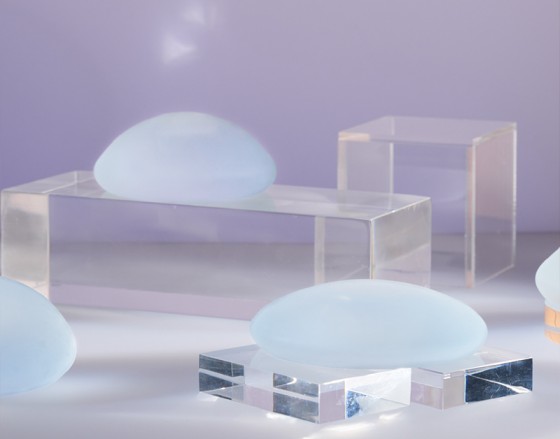
Motiva implants are available in several product lines designed to support different aesthetic and anatomical considerations.
Motiva Ergonomix Implants
Motiva Ergonomix implants are designed to adapt to body posture.
When standing, the silicone gel may shift toward the lower portion of the implant, creating a natural teardrop contour. When lying down, the gel redistributes to create a flatter shape similar to natural breast tissue.
Motiva Ergonomix2 Implants
Ergonomix2 implants build upon the Ergonomix concept with refinements in gel cohesivity and shell engineering.
These updates aim to:
- improve structural balance
- enhance implant flexibility during insertion
- refine how internal weight is distributed
Ergonomix2 implants are associated with newer implant programs designed to improve documentation and warranty structure.
Advantages of Motiva Implants
Motiva implants incorporate several technological features that surgeons may consider when planning breast augmentation.
Potential advantages discussed during consultation include:
- cohesive silicone gel designed to maintain shape
- flexible shell construction that adapts to body movement
- engineered smooth surface technology
- RFID-enabled implant identification in selected models
- implant designs that respond to posture changes
The suitability of these features depends on individual anatomy and surgical goals.
Motiva Implants vs Other Breast Implants
Patients considering breast augmentation often compare Motiva implants with other implant brands.
Feature | Motiva Implants | Traditional Silicone Implants |
Gel behaviour | Designed to adapt to posture | Often maintains fixed shape |
Surface design | Engineered smooth surfaces | Smooth or textured options |
Identification | RFID-enabled option | Standard implant cards |
Shell construction | Multi-layer engineered shell | Varies by manufacturer |
Each implant system has unique characteristics, and the best option depends on individual anatomy and surgical planning.
Who Is a Good Candidate for Motiva Implants?
Motiva implants may be considered for individuals seeking breast augmentation or breast reconstruction.
During consultation, surgeons evaluate several factors including:
- breast tissue thickness
- chest wall anatomy
- skin elasticity
- breast symmetry
- aesthetic goals
These factors help determine the appropriate implant type, size, and surgical approach.
Surgical Techniques Used With Motiva Implants
Breast augmentation procedures can be performed using different surgical techniques depending on implant choice and patient anatomy.
One technique sometimes discussed with Motiva implants is the Preservé approach, which focuses on placing implants while minimizing disruption to natural tissue layers.
This method may be considered when:
- the anatomy supports a smaller access pathway
- preserving tissue structures is desirable
- implant flexibility supports the surgical approach
The suitability of any technique is determined through surgical evaluation.
How Long Do Motiva Implants Last?

Breast implants are not considered lifetime medical devices. Motiva implants are designed for durability, but replacement or revision surgery may be required in the future.
Factors influencing implant lifespan may include:
- natural aging of breast tissue
- implant wear over time
- personal preference or aesthetic changes
Many individuals maintain implants for many years before considering replacement.
How Much Does a Motiva Implant Cost in Singapore?
- surgeon’s professional fees
- implant type and size
- anesthesia services
- surgical facility costs
- follow-up care and monitoring
Safety Considerations for Motiva Implants
All breast implants, including Motiva implants, are medical devices and carry potential risks.
Possible risks may include:
- capsular contracture
- implant rupture
- infection
- changes in breast sensation
- implant displacement
No implant design can completely eliminate these risks. A qualified plastic surgeon evaluates implant options and patient anatomy when discussing breast augmentation procedures.
Motiva Implants and Breast Augmentation in Singapore
Breast augmentation in Singapore is performed by trained plastic surgeons who assess implant suitability during consultation.
Planning typically involves evaluating:
- implant size and profile
- chest wall dimensions
- tissue thickness
- patient aesthetic goals
Motiva implants are one of several implant systems that may be considered when planning breast augmentation surgery.
How Surgeons Choose the Right Implant
- Tissue thickness
- Breast width
- Skin elasticity
- Desired projection
- Lifestyle
In thinner patients, implant behaviour becomes more apparent, while in thicker tissues, soft tissue often plays a greater role in shaping the final result.
Frequently Asked Questions About Motiva Implants
What is a Motiva implant?
A Motiva implant is a silicone breast implant designed with cohesive gel, multi-layer shell construction, and engineered surface features. It is used in breast augmentation and breast reconstruction procedures and is designed to adapt to body movement while maintaining structural stability.
How are Motiva implants different from other implants?
Motiva implants incorporate features such as cohesive silicone gel, engineered shell structures, and smooth surface technology designed to support natural breast movement. Some implants also include RFID-enabled identification for long-term documentation and implant traceability.
Are Motiva implants safe?
Motiva implants are medical devices designed with several structural safety features. However, like all breast implants, they carry potential risks such as capsular contracture, rupture, or infection. Suitability should be evaluated during consultation with a qualified plastic surgeon.
How long do Motiva implants last?
Motiva implants are designed for long-term durability, but breast implants are not lifetime devices. Many individuals keep implants for many years before replacement or revision surgery becomes necessary.
What is the difference between Ergonomix and Ergonomix2 implants?
Ergonomix implants focus on gel behaviour that adapts to body posture, allowing the implant to shift naturally when standing or lying down. Ergonomix2 implants introduce refinements in gel cohesivity and shell engineering to enhance structural balance and flexibility.
Do Motiva implants eliminate the risk of capsular contracture?
No implant can eliminate the risk of capsular contracture. Implant surface design, surgical technique, and individual healing responses all influence how the body forms a capsule around the implant.
Is the Preservé technique a type of implant?
The Preservé approach is a surgical technique developed alongside Motiva implant systems, focusing on implant placement while minimising disruption to natural breast tissue structures.
In selected patients, this may:
- reduce tissue trauma
- support faster recovery
- preserve internal anatomy
However, suitability depends on anatomical factors and implant selection.
Conclusion
Motiva implants represent one approach within modern breast implant technology, incorporating features such as cohesive silicone gel, multi-layer shell construction, and engineered surface design. These elements influence how the implant behaves within the body, including its interaction with surrounding tissue and response to movement. Understanding how these design components compare with other implant systems, along with considerations such as cost, longevity, and potential risks, helps support more informed decision-making when exploring breast augmentation options.
As with any medical device used in surgery, the suitability of a specific implant type depends on individual anatomy, treatment goals, and clinical evaluation. A consultation provides the opportunity to assess these factors and discuss appropriate options within a medical setting.
Book a consultation to discuss suitability and implant options.